
About
I did not come to radio from the web. I came to the web from radio.
Everyone else selling you a station website is a web company that once had a radio client. I am a radio person who got tired of what was on offer and built the thing myself. That is the whole difference, and it shows up in every decision on this site.
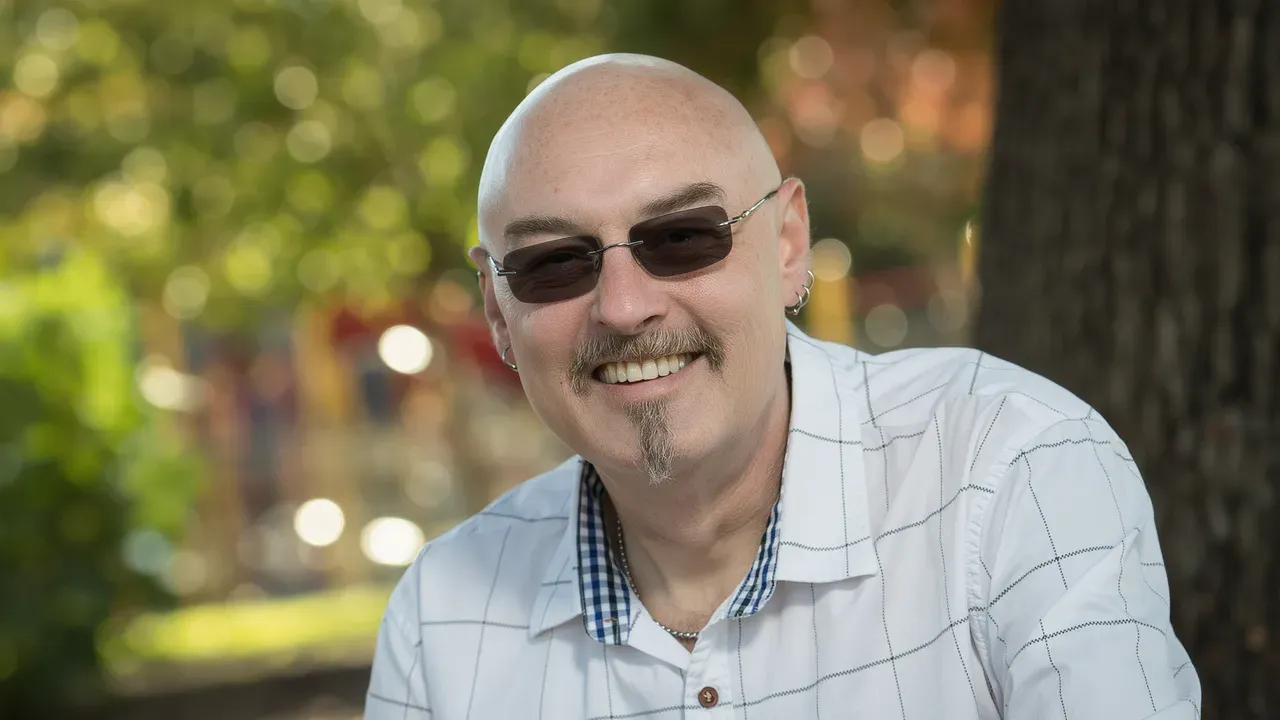
I was twelve
Before I ever set foot in a station I was doing it in my bedroom, with my mother’s Radio Shack microphone and a little tape recorder, talking over records to an audience of nobody. Some kids want to be firemen. I wanted to be the voice between the songs.
I got my first real job in radio at twelve, at an AM/FM country combo in Pascagoula and Moss Point, Mississippi. Midnight to six in the morning, one shift a week, Saturday night into Sunday morning.
I told them I was eighteen. Nobody checked anything back then, and I wasn’t going to be the one to bring it up.
Understand what that shift is, though. Midnight to six on a Saturday is the worst air shift in any building — it’s what you hand the person with no leverage. Nobody sweet-talks their way into it. You take it because you can’t stay away from the place.
The Wuni Bird
Back up a few years. There was a country station in Mobile on 1410 called WUNI — it stood for “you and I,” and everybody said it Woonie. My mother had it on in the house. That’s what I grew up on.
They had a mascot called the Wuni Bird, and you could telephone the station and talk to him. It was some poor guy down the hall doing a voice. I did not know that. I was a kid, and as far as I was concerned there was a bird at the radio station and he would take my call. My mother let me ring him about once a week. This went on for years.
Then in 1984 Mel Tillis bought the place and changed the call letters to WMML, after his own stutter — M-M-Mel. And a few short years after that, they hired me.
Same frequency. Same building. I sat behind the microphone I’d been calling up as a little kid and played the same records I’d grown up hearing come out of it. Nobody gets over that. I certainly didn’t.
So when somebody hands me their station, I know what I’ve got hold of. I’ve been on the other end of it — once a week, on the phone, talking to a bird.
Then the Gulf Coast, for a long time
After that I moved around the way disc jockeys do, which is to say constantly. Music director at WXWY in Robertsdale. Program director at WZBA in Mobile, owned back then by a group over in D’Iberville, Mississippi. Station manager at WKQR, just outside Mobile.
And along the way WJLQ in Pensacola, WABB and WKSJ in Mobile, WCPR and WQID in Biloxi. On air, music director, program director, assistant station manager — most of the chairs, at one point or another. Voiceover work the whole time, and still.
These days I own and run Power88.FM. So when you tell me a show moved three months ago and the website still has the old grid up, I’m not being polite about it. That’s been my Tuesday.
I was never the engineer. I just would not leave him alone.
Never held the title, never had the ticket. But at every station I ever worked at, the first friend I made was the engineer — and I suspect a few of them wished I hadn’t.
I wanted to know how it worked. Not in a general way. What does that rack do. What happens to the signal between here and the tower. Why did it stop doing it tonight. There were stretches where I spent three, four nights running out at a transmitter site with an engineer chasing a fault, and nobody was paying me to be there. I wasn’t on the clock. It was the gear that carried the only thing that ever made me properly happy, and I wasn’t going home until I understood it.
Every one of those men explained it to me. Patiently, at two in the morning, to a disc jockey who had no business being out there. Not one of them made me feel stupid for not knowing yet.
So if you don’t know what an SSL certificate is, or how hosting is different from a domain — fine. Neither did I. I’m not going to bill you for the gap or talk over your head to make the invoice look heavier.
San Francisco, and a program I could not stand
I moved to San Francisco in 2005, right after I’d stepped out of radio for a while, and started teaching myself web development in Adobe Dreamweaver.
Anybody who used Dreamweaver knows exactly where this is going. It was built on the idea that you shouldn’t have to see what it was doing — and what it was doing, quietly, on your behalf, was writing an absolute mess. I couldn’t fix any of it, because I couldn’t see any of it. Drove me up the wall.
So I threw it out and learned to write the code myself. Then how to build software. Been doing it ever since.
Which is the transmitter all over again, twenty years later. I don’t trust a box that won’t tell me what’s inside it, and I can’t leave one alone until I know. No bootcamp, no degree — just a long-standing refusal to let something stay a mystery.
The part that isn’t radio
All that learning happened nights and weekends, because in the daytime I was general manager over eight locations of The UPS Store — seven years of that. Then twelve years as global vendor manager at Minted.com.
Which sounds like filler on a résumé until you ask the question this page otherwise can’t answer: why should I believe you’ll actually pick up the phone?
Anybody can type “real customer service” onto a website. Stand behind eight retail counters for seven years and you find out precisely what it costs you when you haven’t got it — it costs you the customer, and they tell people. Then spend twelve years working with vendors twelve time zones away and you learn the other side of it: what it feels like to need one straight answer from somebody and not be able to get one out of them.
I’ve been that customer. It’s miserable. I’m not doing it to you.
What I actually think about all this
Most of what makes a website feel hard has been manufactured on purpose. Somebody doesn’t know what an SSL certificate is, or how hosting differs from a domain, and instead of being told plainly in one sentence they get handed a number with a lot of vocabulary stapled to it.
The work isn’t complicated. The sales process is complicated, and it’s complicated because your confusion is worth money to the man selling.
The value was always there. Charge a fair price for it, put a real human on the end of the phone, and quit making people feel stupid about their own website.
Which is why you don’t have to turn up knowing what you want. No brief, no color palette, no content strategy, no homework.
Getting it out of people is the job I actually had for forty years. It used to happen on the air, and most of the time the guest never noticed it was happening. So don’t prepare anything — just talk to me. What you can’t stand about the site you’ve got. What your station sounds like. What you wish the thing did.
Then I’ll go away and bring it back as something you can look at, and you can tell me what’s wrong with it. Reacting is far easier than describing.
Have a look at the work.
Power88.FM is my own station, running on this. The demo station is a complete build with nothing on it a real station would not have. And the guides are me writing down the things nobody else in this business will put in public.